Recognising wine colour starts with a white sheet of paper. If you consciously examine the hue, you can read freshness and maturity – in white and in red, from the first sip to the last drop in the glass. We show you how to reach a clear assessment at home with no tools other than a sheet of paper – at the kitchen table, on the windowsill or on the go with a picnic basket, as long as the background isn’t coloured. And we explain what the tint reveals about whether a wine is fresh and fruity or already mature – with an example you can apply right away, step by step, and with a look that sticks.
Recognising wine colour: how to check it properly
Place your glass on a plain white sheet of paper – not on wood, not on a patterned tablecloth. Hold the glass at a slight angle so the wine forms a flat surface, and look from the rim towards the centre. On a coloured background every hue looks different; the paper removes the background for your eye and makes nuances visible. This way you see exactly what is in the glass, in both white and red – no apps, no accessories, just calm and a bright spot at the table. Afterwards, hardly move the glass at all; a gentle tilt is enough for the rim to appear as a fine edge. That way you can compare several wines side by side, each glass on its own sheet – and your view stays neutral.
What white wine colours reveal
With white wine, the white sheet shows the brightness without distraction: a delicate, clear tone seems fresh and fruity; a deeper, golden shimmer often indicates maturity. Put the paper under the glass, tilt it slightly and watch the transition from the rim to the centre – in younger wines the edge often looks almost water-white and the centre transparent. A typical moment at home: at the dinner table after cooking, the pan is still on the stove, you place your glass on the paper next to your plate and see the colour without the wood or the tablecloth influencing it. That is how you classify the impression; recognising wine colour works best before smelling – look first, then smell, then taste.
Reading red hues without distraction
With red wine, a coloured table quickly distorts the impression; the white paper removes the glass from its surroundings. Tilt the glass gently and look at the rim first: if the edge looks lively cherry red or violet, many think of fresh and fruity; if it appears calmer, with warmer tones, that often points to maturity. In powerful wines the centre looks darker, but for classification the bright edge helps more than the depth in the middle. An everyday image: there is a red runner on the coffee table – lay the sheet over it, place the glass on top, and the colour stands on its own, without any interference from the pattern – even if the room is colourfully decorated.
Fresh and fruity vs. mature: the comparison
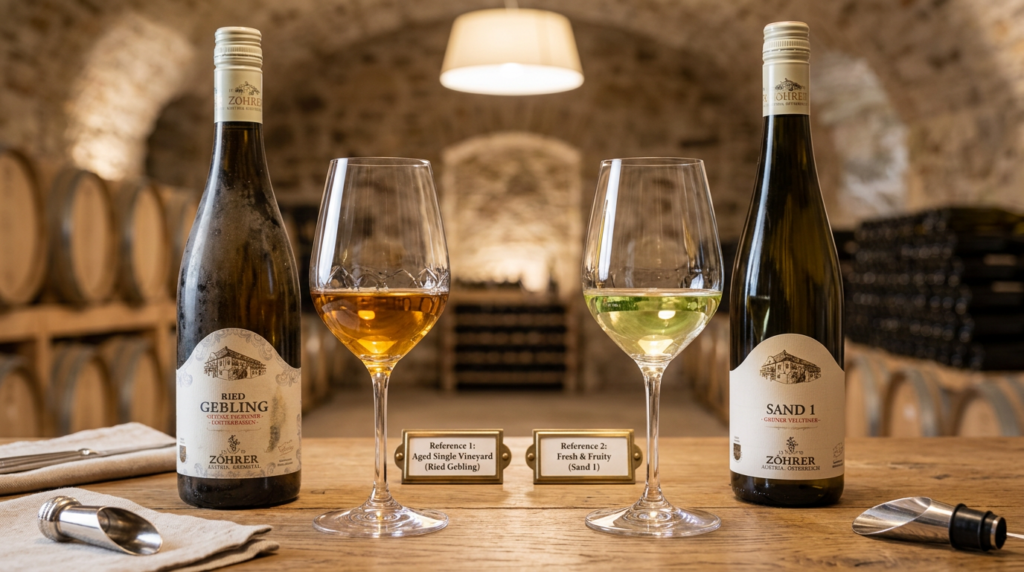
Place two glasses side by side on a white sheet of paper. On the left, a fresh, fruity white wine: the rim looks very pale, the centre clear, the shimmer cool; on the right, a mature white wine: the colour shows more warmth, the rim is more defined, the shimmer more golden. Repeat with red wine – on the left fresh and fruity with a bright edge, on the right mature with a calmer, warmer rim. This is how recognising wine colour can become an aha moment: the direct comparison takes away the mystery, you see the differences without words and have a simple reference when new bottles arrive at the table later in the evening. If you want to capture the moment, take a photo from above – the white sheet forms the frame and the colours speak for themselves.
You will find both fresh and fruity and mature wines in our online shop – and soon we will have something very special from our private wine library for lovers of mature wines. Choose your favourites, have the white sheet ready and experience the difference in your own glass, with the comparison giving you orientation from the very first moment. That way you bring a small tasting ritual to your kitchen table and get to know your wines with fresh eyes.
