The Family – Anton & Toni Zöhrer


Anton Zöhrer
Recipient of the Grand Badge of Honor in Gold with Laurel. Member of the Austrian Wine Knights, the Krems Wine Brotherhood, and the St. Christoph / Arlberg Hospitz Brotherhood.
The art of making great wines lies in keeping the process as simple as possible.

Toni Zöhrer
Toni Zöhrer is the 36th generation to run the family winery and is proud to carry on the tradition with his family and team. The most important grape variety is Grüner Veltliner, and Riesling also plays a central role; specialties include Gemischter Satz, Muskateller, Chardonnay, Rosé, and red wines made from Zweigelt and Pinot Noir. To produce an outstanding wine, you need a great vineyard site, a feel for nature, and an unbridled determination to push beyond your limits every day.
You can't learn that—it's a passion.
Zöhrer Winery, dating back to 1270

The roots of the winery and the Zöhrer family date back to the Babenberg era in Austrian history. Around 1300, Albrecht I (1245–1308) granted twenty of his most loyal vassals farmland, floodplain forests, orchards, and vineyards in and around Weinzierl (now a district of Krems)—the feudal lords of Krems/Weinzierl.
The Zöhrer family was one of the 20 feudal lords of the time and is now the last of those estates still active internationally. For generations, the knowledge and tradition have been passed down from Anton Zöhrer. The winery is consistently working to realize the full potential of its great vineyards—which rank among the most significant in the Kremstal. For it is there, in the terroirs of Ried Kremser Sandgrube, Ried Kremser Weinzierlberg, Ried Kremser Wachtberg, Ried Kremser Gebling, Ried Kremser Thurnerberg, Ried Kremser Limberg, and Ried Kremser Goldberg, lies the strength of the Zöhrer Winery.
Most of the vines were planted by the grandfather and father 40 to 100 years ago; the focus is on the Grüner Veltliner and Riesling varieties. The wines have a distinctive character, are shaped by the terroir, and are highly regarded internationally.

1112–1566
1112: First mention of Weinzierl in the founding charter of the St. Georgen an der Traisen Monastery.
1240: Albero von Kuenring (vogt of Lehner) is mentioned in a document from the Munich State Archives.
1270: First documented mention of the Zöhrer family in Krems.
1340: Duke Albrecht II confirms the rights of the 20 vassals.
1522–1566: Separation of the princely vineyards from the fiefs.
1705–1909
1705: The Lehner community purchased its freedom from the Grafenegg manorial estate for 12,200 guilders; it acquired administrative and judicial authority over the village of Weinzierl.
1795: Purchase of St. Anthony’s Church and the infirmary from the Bürgerspital-Krems.
1876: Dedication of the new cemetery.
1905: Voluntary merger of Krems with Weinzierl.
1909: Weinzierl had 85 house numbers.
1923–1976
1923–1929: Dissolution of the jointly owned property and its division among the individual members, leaving only a residual portion.
1953: First vintage of Ried Kremser Weinzierlberg.
1954: Birth of Anton Zöhrer XXXV.
1955: First vintage of Ried Kremser Gebling.
1976: Anton Zöhrer’s Master’s Examination, XXXV.
1980–2009
1980: Birth of Toni Zöhrer XXXVI.
1983: Opening of the new facility at Kremser Sandgrube 1.
1985–1995: Multiple Gold and Grand Gold medals at Austrian wine fairs.
1989: First exports of the wines abroad.
1996: Admitted to the Salon of Austrian Wines.
1997: Opening of the Zöhrer Guesthouse.
2002: Switch to screw caps; multiple wins at the Kremser Sandgruben Champion Tasting (2000–present).
2003: Toni Zöhrer’s Master’s Exam XXXVI.
2005: First export to North America.
2009: First export to Asia.
2010–2019
2011: Toni Zöhrer is named Newcomer of the Year.
2012: 3 nominations at the Salon Österreichischer Wein; launch of the sponsorship program for the “Sand1 Collection.”
2013: Birth of Anton Zöhrer XXXVII.
2016: First vintage of Ried Kremser Wachtberg.
2017: Toni Zöhrer XXXVI. took over the winery; “Discovery of the Year” at Wein.plus; runner-up at the AWC Vienna for the Grüner Veltliner SAND 1.
2018: Birth of Sophie Zöhrer I.
2019: Exports to 20 countries.
2020 – Present
2020: 750 Years of the Zöhrer Winery & 40 Years of SAND 1.
2021: Expansion of the variety selection to 10 premium varieties.
2022: AWC Vienna runner-up for the Ried Thurnerberg Grüner Veltliner; expansion of the lineup to 9 single-vineyard wines.
2023: Double/triple victory in Germany (best wines of the tasting) for the Ried Wachtberg and Ried Weinzierlberg Grüner Veltliner.

Kremstal DAC (Districtus Austriae Controllatus) as a pioneer along the Danube. The newly established Kremstal DAC designation of origin brings fresh momentum to an established region. The Austrian Wine Marketing Board (ÖWM) is also pleased with the decision of the Regional Wine Committee.
“The Kremstal is a renowned wine-growing region both nationally and internationally. The new Kremstal DAC reinforces our efforts to produce wines that reflect their specific terroir in Austria,” says Willi Klinger, managing director of the ÖWM, with conviction. “Internationally as well, the Kremstal DAC will solidify the region’s position through a distinct flavor profile.”
The heartland of fine white wines
Kremstal DAC
Kremstal Strengthens Its Sense of Place
Grüner Veltliner and Riesling are considered the flagship varieties of the Kremstal region. They account for over 70% of the wines submitted for certification. For this reason, the Kremstal DAC designation was also established for these two grape varieties. According to the Wine Act, the wine must be a single-varietal wine. A Kremstal wine is therefore either a Riesling or a Grüner Veltliner.
Two quality levels: Kremstal DAC and Kremstal Reserve DAC.
A classic Kremstal DAC has an alcohol content of 12 or 12.5% vol., as indicated on the label. According to wine law, a Kremstal DAC must be dry and exhibit aromas typical of the grape variety and region—that is, fresh, fruity, and spicy-fragrant. The official tasting commission monitors this style based on reference wines. A Kremstal DAC must not contain any aromas attributable to aging in new small oak barrels or to Botrytis. The earliest submission date for a Kremstal DAC is January 1 (or 2) of the year following the harvest.
Kremstal DAC Reserve – the hallmark of great wines.
The wine cellars of many Kremstal wineries bear witness to a tradition of great wines spanning many decades. A Kremstal DAC labeled “Reserve” features ripe aromas, body on the palate, and often a smooth finish. It therefore has an alcohol content of at least 13% vol. and may contain up to 9 grams of residual sugar. The focus is on varietal character, though aging in small new oak barrels is permitted. The resulting aromas can thus be part of the flavor profile of a Kremstal DAC Reserve, as can subtle hints of botrytis. The earliest submission date for a Kremstal DAC Reserve is March 15 of the year following the harvest.
Only wines that come from vineyards in the Kremstal and have been vinified and bottled in the Kremstal may bear the “Kremstal DAC” designation.
Copyright: ÖWM
RIEDEN / LAGEN
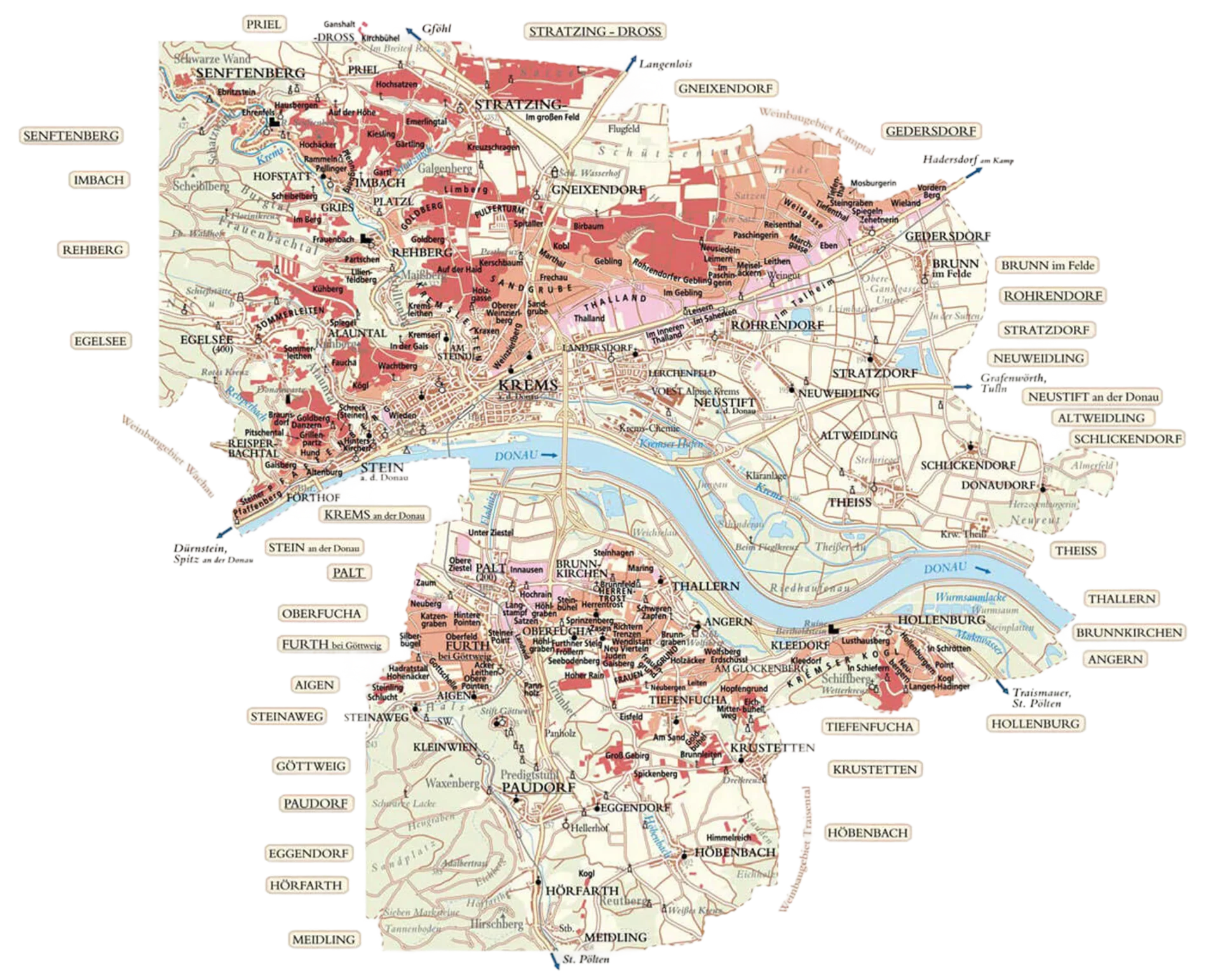
The wine town of Krems is the heart of the Kremstal appellation and widely regarded as the epitome of Austrian wine culture. The famous vineyards surrounding the historic old town are internationally acclaimed. The loess soil, which has been deposited here over thousands of years, provides the fertile ground for our wines.
VINEYARD / LOCATION / CRU
KREMSER LIMBERG
– in the year 1300 –
The Ried Kremser Limberg, situated on loess and crystalline quartz rock overlying mineral gneiss, is the highest vineyard in the Kremstal Valley; its rows are oriented north-south to allow for better air circulation and a greater variation in temperature.
Site where the oldest Venus figurine known to humanity—a woman—was discovered, dating back 36,000 years.
VINEYARD / LOCATION / CRU
KREMSER WEINZIERLBERG
– in the year 1300 –
Description placeholder
VINEYARD / LOCATION / CRU
Title placeholder
– in the year 1300 –
Description placeholder
VINEYARD / LOCATION / CRU
Title placeholder
– in the year 1300 –
Description placeholder
VINEYARD / LOCATION / CRU
Title placeholder
– in the year 1300 –
Description placeholder
VINEYARD / LOCATION / CRU
Title placeholder
– in the year 1300 –
Description placeholder
WINE QUALITY
The Soils / Terroir
The stony primary rock and the slate soil store the sun’s heat, ensuring a balanced thermal environment in the vineyard terraces during cooler nights. But stony soils do even more. They are very rich in potassium and provide the vines with a rich, natural source of minerals that also finds its way into the grapes. Thus, the primary rock and slate soils impart a distinctive mineral character to our Gigant and Urknall collections.
The loess—powerful, deep, and very delicate. Its fertility stems from the small, yet not overly fine, grain size and the resulting easily accessible mineral richness. Roots extending up to 17 meters deep give our wines from the Sand1, ClassiC, Impuls, and Urknall collections their unmistakably bold aroma and elegantly rounded flavor. Our red wine collection also comes largely from loess and therefore benefits from its complexity and density.
Old grapevines
Terraced vineyards, facing south and overlooking the Danube, create the perfect climate. The south-facing slope guarantees sunlight from morning to evening, which is also reflected onto the vineyard terraces by the Danube. Furthermore, the Danube—like the primary rock, loess, and slate soils —stores the sun’s heat and releases it to the vines at night and on cooler days. This microclimate ensures a long growing season, during which the grapes ripen slowly while retaining their refreshing acidity.
The Yield
Healthy, fully ripe grapes harvested at just the right time—that’s the approach the Zöhrer Winery takes year after year, guided by a motto passed down through the generations: Fewer grapes on the vine—better wine quality in the cellar!
Controlled & Integrated Viticulture (KIP)
The Zöhrer Winery, which operates using “integrated” farming practices, views soil fertility as the most important foundation for producing great wines. We strive to minimize external interference with nature as much as possible and always prioritize methods that are identical to or similar to those used in organic farming. Toni Zöhrer has announced plans for a complete conversion of all vineyards, though this will be a long and arduous process for the terraced vineyards!
In recent years, integrated viticulture (KIP) has emerged as another area within nature-oriented farming practices that combines environmental and nature conservation with economic efficiency and social responsibility. This triad of ecology, economy, and social responsibility is based on the concept of sustainability and reflects the principle that improvements in one of these three areas must never come at the expense of the others.

Synonyms:
“Environmentally Friendly Viticulture” (Germany)
“Viticulture Raisonnée” (France).
“Controlled Integrated Production” (Austria)
Just as with “organic,” there are cultivation guidelines that are established and monitored by associations within the EU.
Among the most important organizations are:
“Controlled Environmentally Friendly Viticulture” (KUW)
“Association of German Prädikat Wine Estates” (VDP) Germany
“Terra Vitis” (TV) France
“Controlled Integrated Production” (KIP) Austria.
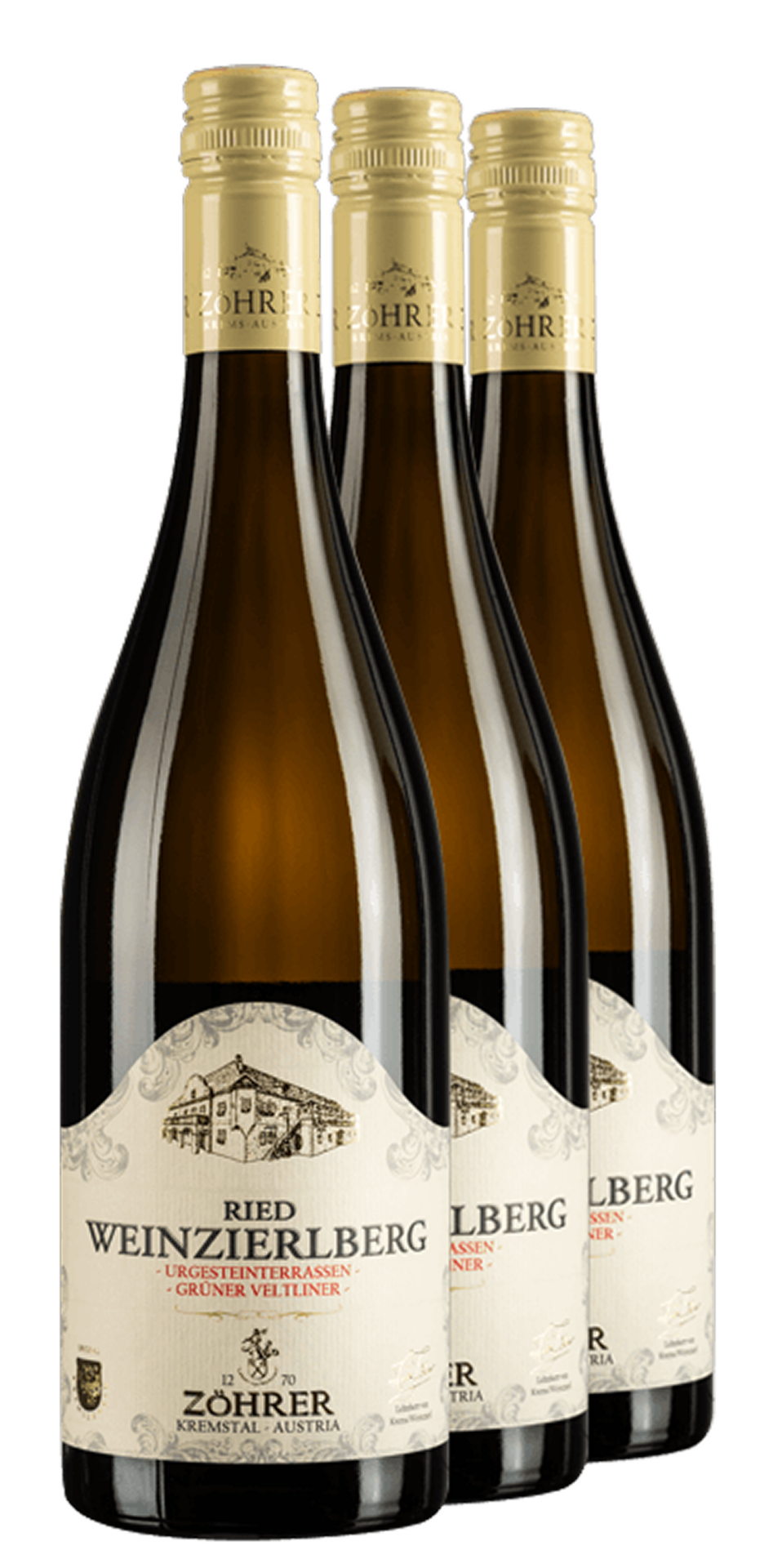
Our Case for the Screw Cap
We are often asked why we don’t seal our Orts & Rieden / single-vineyard wines with corks.
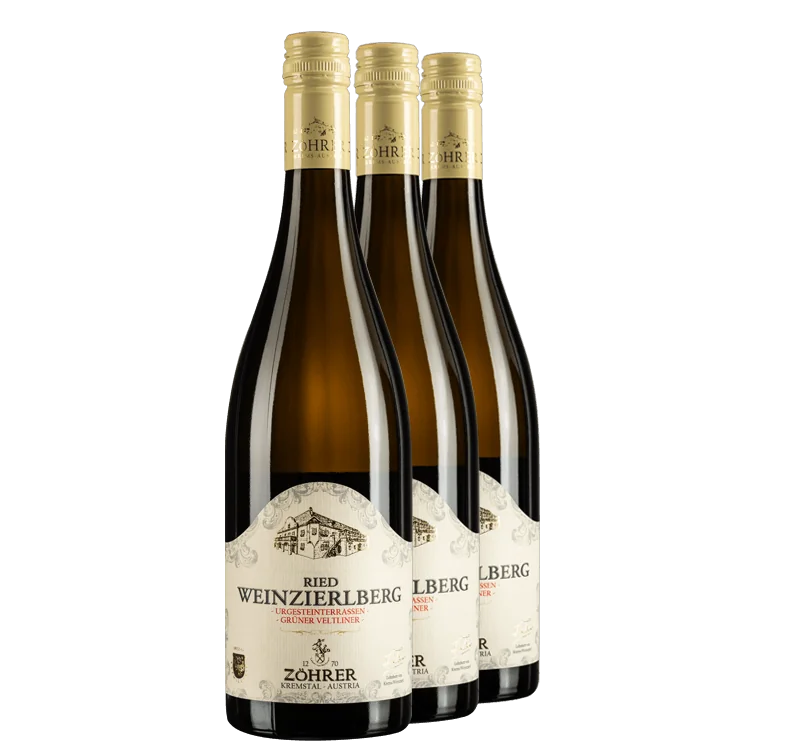
For us, screw caps offer the following quality advantages:
- Improved aromatic stability, slower oxidative aging
- Zöhrer wines are as natural and minimalist as possible. The use of screw caps significantly reduces the amount of sulfur needed in the wine.
- It is crucial whether or not the bottle is topped off with CO2 during filling. If it is not topped off, the effect of oxygen is comparable to that of bottling with natural cork—the air in the bottle promotes the aging process.
- A large part of the wine’s aging occurs during the first six months after bottling due to the oxygen present in the neck of the bottle or in the cork—approximately 4 mg/L O2. Further aging due to oxygen diffusion between the cork and the neck of the bottle is unpredictable and varies significantly from cork to cork, sometimes by a factor of many times:
Natural cork: 0.5 mg – 23 mg(!!) O₂/year
Screw cap: 0.0 mg – 1.5 mg for screw caps
The best corks are about as airtight as screw caps. However, no cork producer can guarantee this level of airtightness. This results in enormous variations between bottles even within the same batch. With screw caps, aging is predictable; with natural cork, it is not. - Surely the most important reason: no corked wines!
When it comes to quality, we do not let our emotions guide us in this case; instead, we rely on facts and experience.