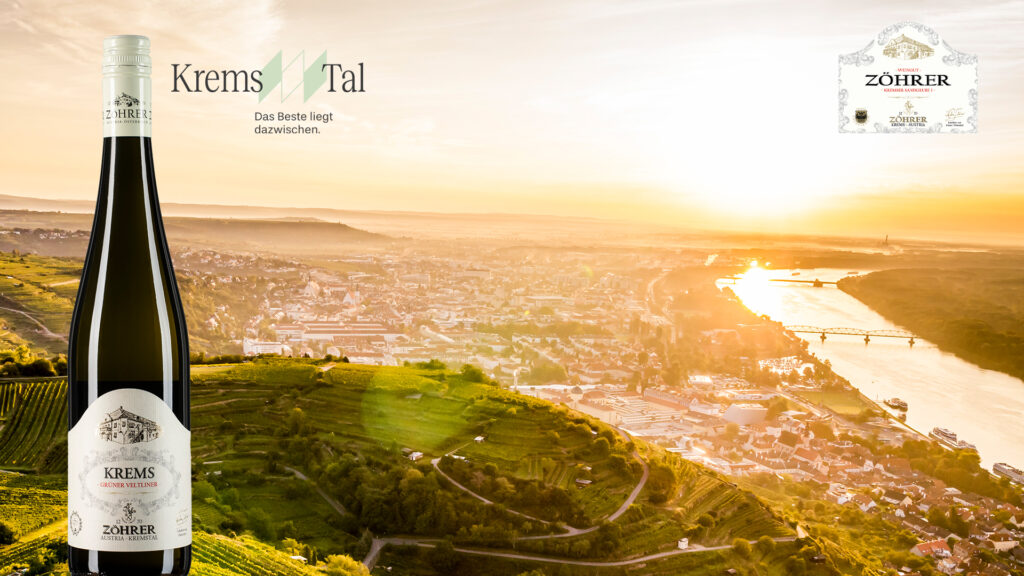
Have you ever looked at a wine label and wondered why some wines bear the name of an entire region, others the name of a town, and still others a very specific vineyard site?
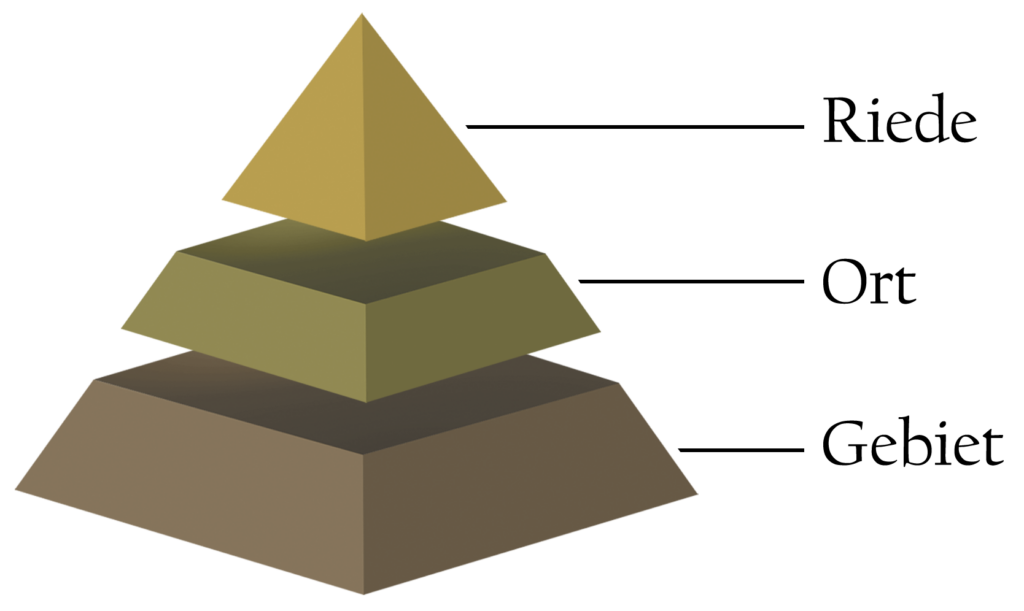
There is a system behind these designations – more precisely, the Kremstal origin pyramid. This three-tier classification of the legally protected origin Kremstal DAC lets wine lovers see at a glance how closely a wine is rooted in its home.
As a traditional winery whose roots here in Krems go back to 1270, our heart beats especially for wines that bring this character into the glass unadulterated. Let’s set off together on a journey of discovery through the tiers of the origin pyramid!
The foundation: Regional wine
The base of the pyramid is the regional wine (labelled Kremstal DAC). The grapes for these wines may come from anywhere in the Kremstal. Regional wines stand for the classic, easy-drinking and varietally typical style of our region. They are mostly shaped by loess, approachable, fruit-driven and a great deal of fun even when young.
The golden middle: Village wine
One tier up, things become much more specific: the village wine (e.g. KREMS Kremstal DAC). Here the grapes must come 100 % from a single, legally defined village or municipal area. A village wine reflects the very specific mesoclimate and the typical soil composition of a municipality. These wines show more ripeness, a deeper structure, a fine balance and wonderful ageing potential.
The top: Single-vineyard wine
The highest tier of the pyramid is the single-vineyard wine (Riedenwein). These wines come from a single, precisely defined vineyard site (Ried) – such as our top site Ried Gebling. Here the pure, unmistakable terroir of a single plot takes centre stage. They are characterful monuments of great complexity that often only reveal their full splendour after a few years in the cellar.
The Krems village wine and its grape varieties
The vineyard area of the Kremstal is divided into three distinct zones: the historic town of Krems, whose western part called “Stein” borders directly on the Wachau, and the Kremstal proper; the mighty loess blankets adjoining to the east; and finally the small wine villages south of the Danube around the monumental Göttweig Abbey. Since 2007, Kremstal DAC has stood for spicy Grüner Veltliners and elegant, mineral Rieslings, which come onto the market in a fresh, classic to medium-bodied style as well as powerful Reserve wines. – Österreichwein
Only the valley’s two great leading grape varieties are permitted for the Kremstal DAC village wine category: Grüner Veltliner and Riesling. Both must traditionally be vinified dry.
With more than 1,000 years of winegrowing tradition, the historic wine town of Krems offers a very special terroir. Here mighty, heat-storing loess terraces meet hard primary rock soils. It is precisely this combination that gives the Krems village wine ripe fruit aromas paired with an elegant, mineral acidity.

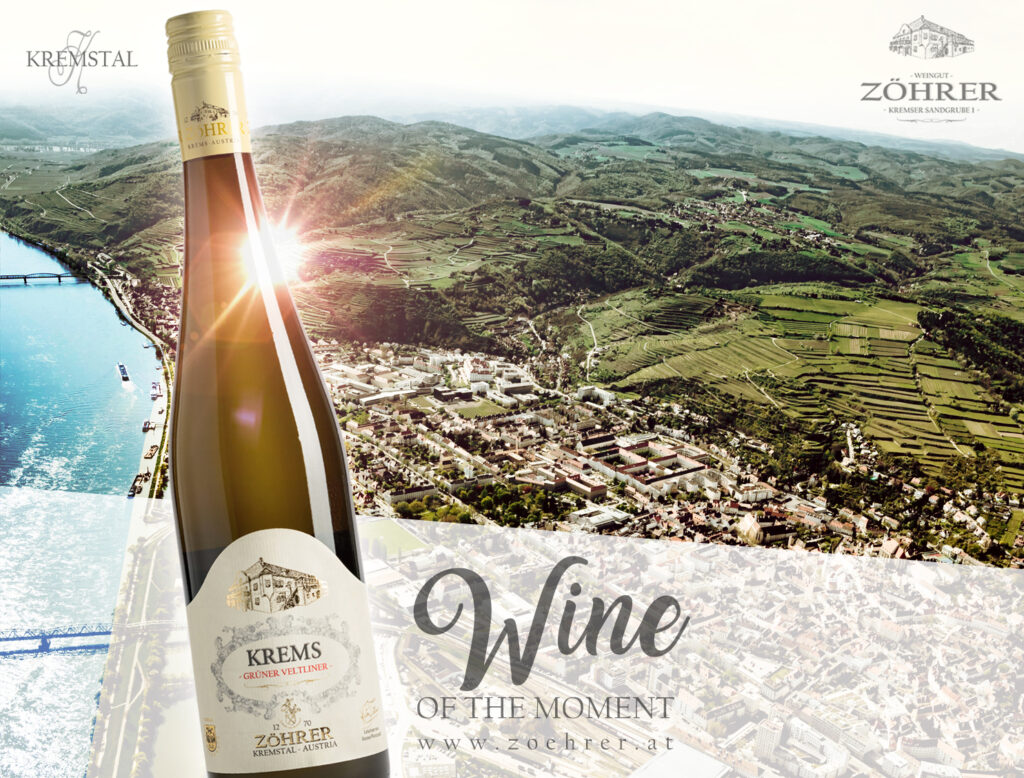
In the spotlight: Our KREMS Grüner Veltliner Kremstal DAC
If you want to taste what makes a true Krems village wine, you don’t have to look far. From the heart of our historic home at Sandgrube 1, we bring this character of origin into the bottle.
Our KREMS Grüner Veltliner village wine perfectly captures the interplay of loess and primary rock:
- On the nose: A fine, lively play of yellow fruit, white currant and an elegant touch of the exotic.
- On the palate: Full-bodied, textured and carried by that typically spicy note we lovingly call the “Pfefferl” (a little pepper) in Austria.
- With food: An absolute all-rounder! It pairs superbly with classic Austrian cuisine from Wiener Schnitzel to Tafelspitz, and thanks to its power it is just as brilliant with Danube fish or Asian dishes.
With our old vines and a calm, harmonious maturation in the barrel, we define the Krems village wine in our very own traditional way – deeply rooted in Krems since 1270.
Visit us at Sandgrube 1 or bring a piece of Krems wine culture straight home. Go directly to our KREMS Grüner Veltliner in the online shop.
